
Jamaica vs Cayman Islands: average net forest area change per year by period
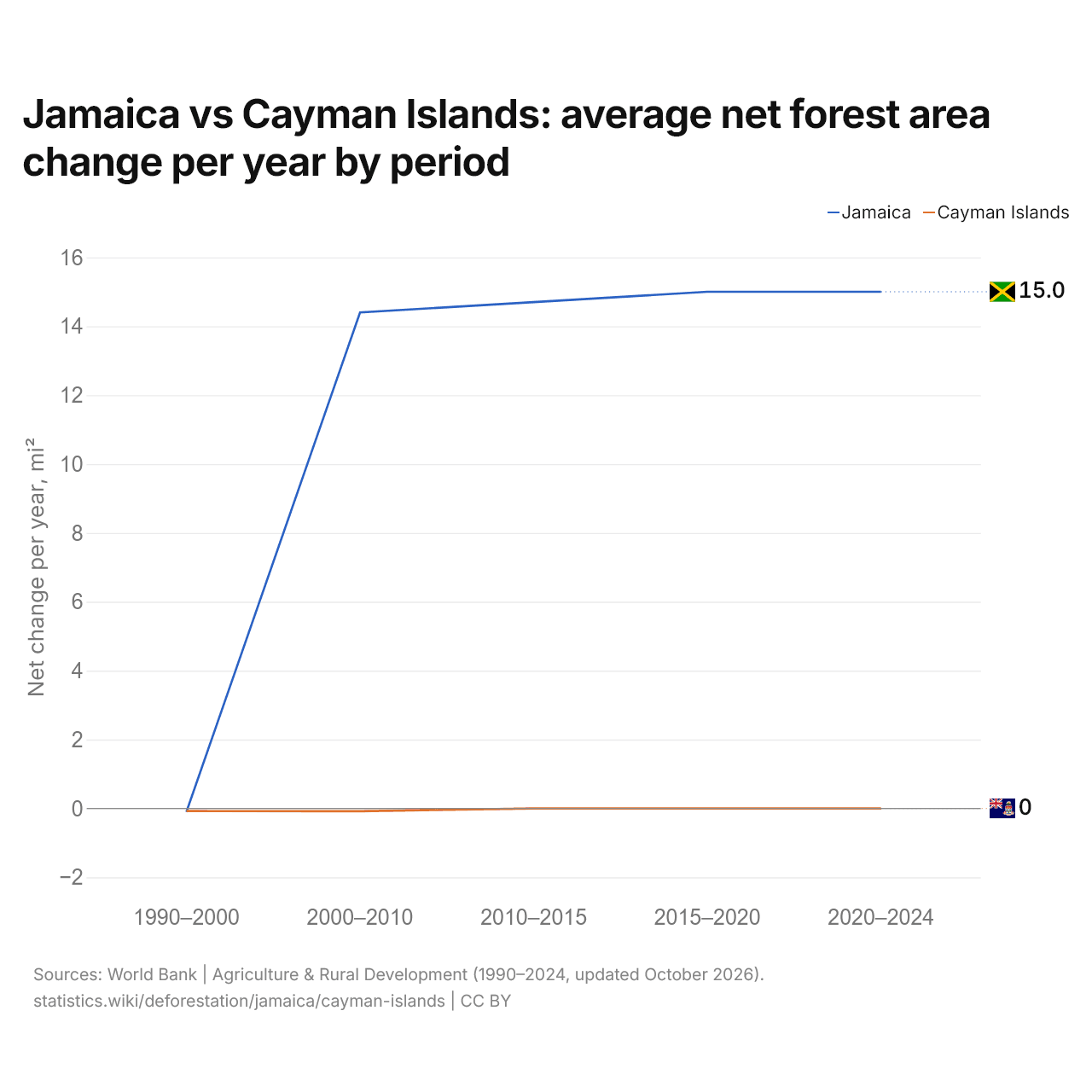
| Period | Net change per year, mi² | |
|---|---|---|
| Jamaica | Cayman Islands | |
| 1990–2000 | −0.104 | −0.077 |
| 2000–2010 | 14.4 | −0.081 |
| 2010–2015 | 14.7 | 0 |
| 2015–2020 | 15 | 0 |
| 2020–2024 | 15 | 0 |
The forest area grows by 15 mi² (38.9 km²) a year in Jamaica and is unchanged in the Cayman Islands. In 1990–2000, it did not change in Jamaica or the Cayman Islands.
Jamaica vs Cayman Islands: net forest area change
 Jamaica |
 Cayman Islands |
|
|---|---|---|
| Net change since 1990 | +352 mi² | −1.58 mi² |
| Net change since 1990, % | +17.5% | −3.1% |
| Average net change per year, 2020–2024 | +15 mi² a year | 0 mi² a year |
| Average net change per year, 2020–2024, % | +0.64% | 0% |
| World rank by net forest loss since 1990 | n/a | #86 of 186 |
| Rank in Latin America | #6 of 34 | #21 of 34 |
| Rank in income group | #14 of 55 (upper-middle) | #13 of 61 (high) |
| World rank by net forest gain since 1990 | #49 of 186 | n/a |
Jamaica and nearby countries: net forest area change since 1990, %
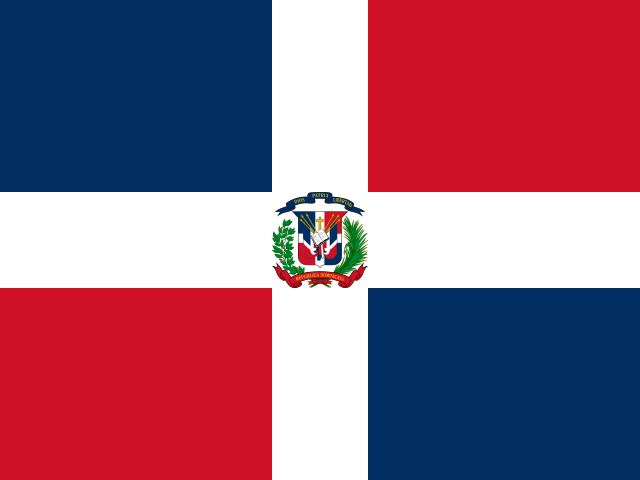
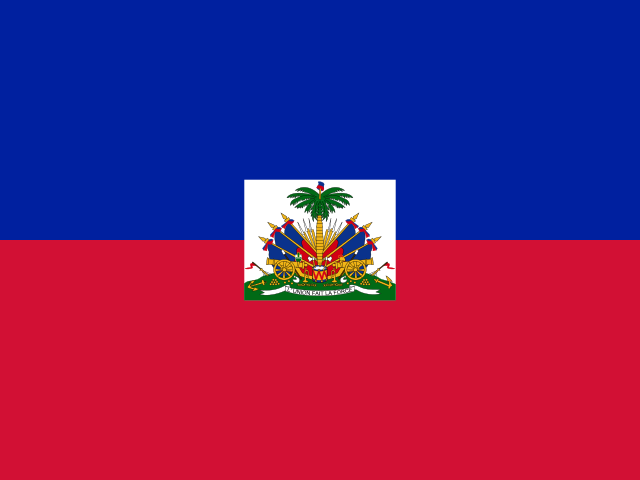
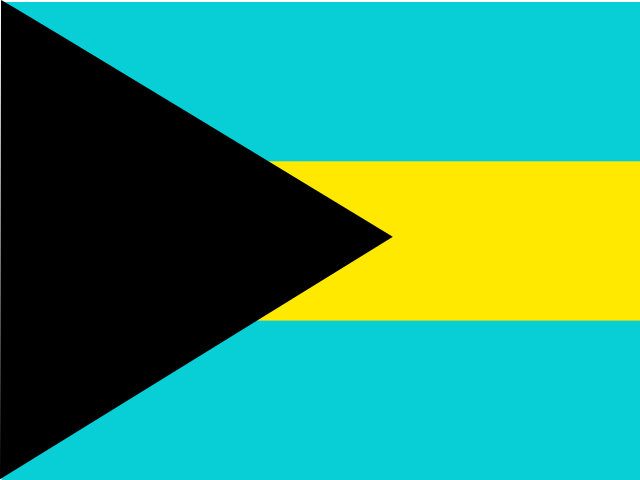
Cayman Islands and nearby countries: net forest area change since 1990, %
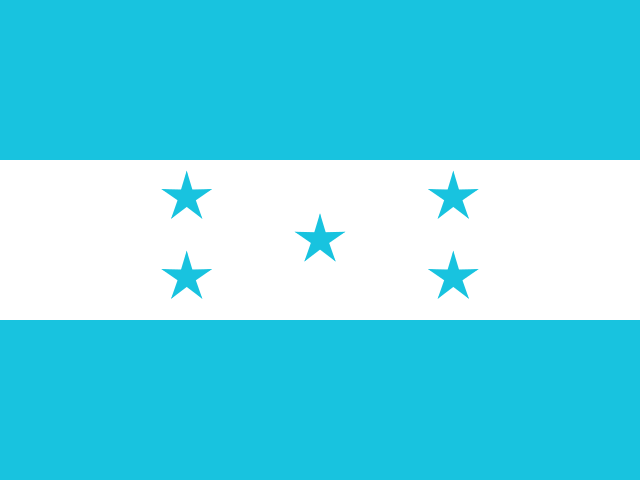
Since 1990, Jamaica's forest area has grown by 17.5% and the Cayman Islands' has shrunk by 3.1%. Among the countries near Jamaica, Cuba has had the largest gain, 56.6%, and the Cayman Islands the largest loss, 3.1%; among the countries near the Cayman Islands, Cuba has had the largest gain, 56.6%, and Honduras the largest loss, 22.7%.
Compare the deforestation of any 2 countries
Sources:
- World Bank | Agriculture & Rural Development (1990–2024, updated October 2026)
Creative Commons Attribution (CC BY): you may copy, share, adapt and reuse this content, also commercially, as long as you credit statistics.wiki and note any changes you made. The sources listed above may have their own license terms.