
Georgia vaccination coverage of 1-year-olds: measles, DTP3 and hepatitis B
| Year | % of children | ||
|---|---|---|---|
| Measles (MCV1) | DTP3 | HepB3 | |
| 2024 | 90% | 86% | 90% |
| 2023 | 95% | 88% | 93% |
| 2022 | 90% | 85% | 85% |
| 2021 | 90% | 85% | 85% |
| 2020 | 91% | 88% | 88% |
| 2019 | 99% | 94% | 94% |
| 2018 | 98% | 93% | 93% |
| 2017 | 95% | 91% | 91% |
| 2016 | 93% | 92% | 92% |
| 2015 | 96% | 94% | 94% |
| 2014 | 92% | 91% | 91% |
| 2013 | 97% | 93% | 96% |
| 2012 | 93% | 92% | 92% |
| 2011 | 91% | 94% | 89% |
| 2010 | 94% | 92% | 95% |
| 2009 | 83% | 88% | 54% |
| 2008 | 97% | 92% | 89% |
| 2007 | 97% | 98% | 94% |
| 2006 | 96% | 88% | 84% |
| 2005 | 90% | 82% | 79% |
| 2004 | 86% | 78% | 64% |
| 2003 | 76% | 75% | 48% |
| 2002 | 75% | 84% | 51% |
| 2001 | 74% | 87% | 61% |
| 2000 | 73% | 80% | 55% |
| 1999 | 76% | 84% | - |
| 1998 | 73% | 80% | - |
| 1997 | 69% | 80% | - |
| 1996 | 65% | 80% | - |
| 1995 | 61% | 79% | - |
| 1994 | 63% | 58% | - |
| 1993 | 61% | 54% | - |
| 1992 | 16% | 58% | - |
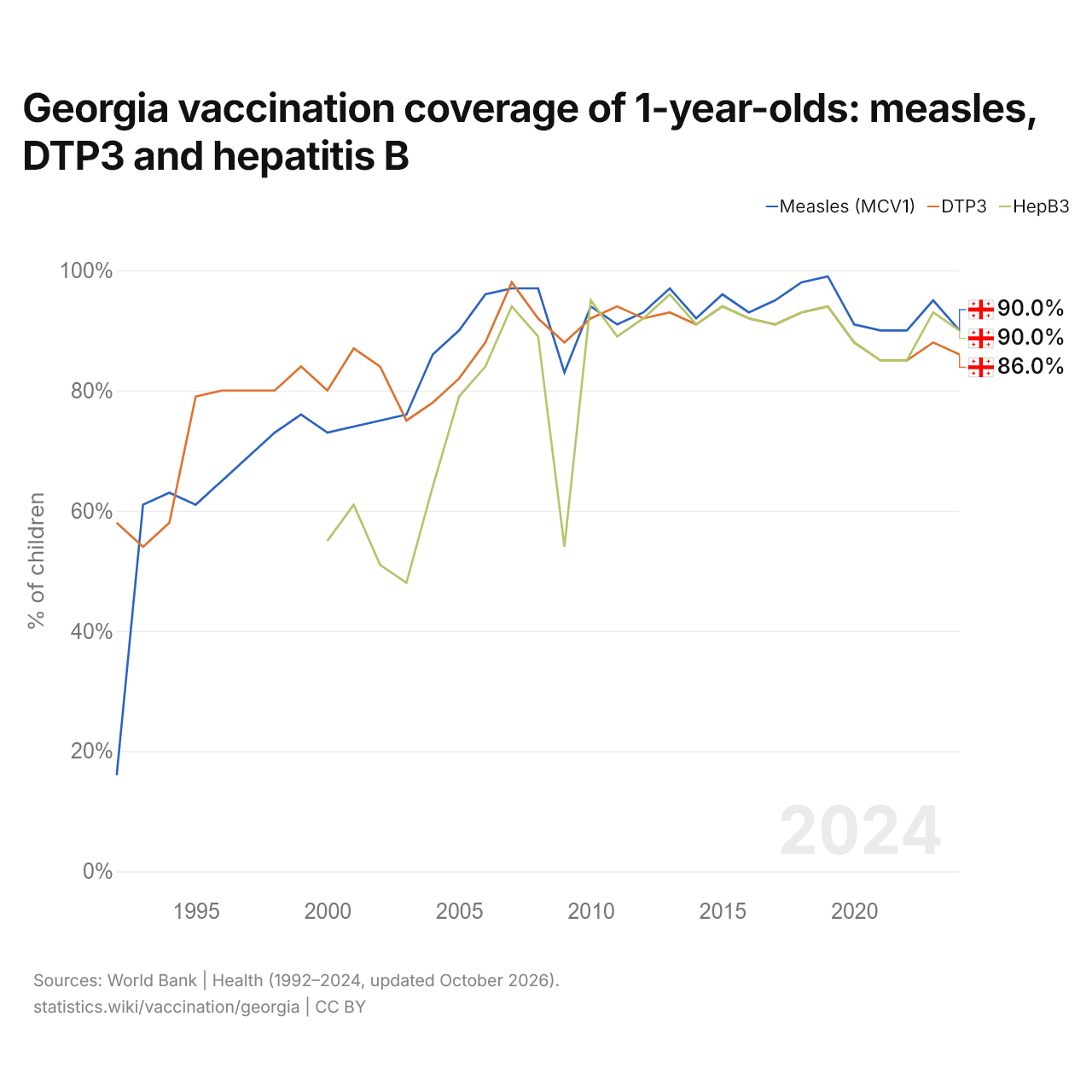
The first measles dose reaches 90% of children aged 12–23 months in Georgia, the third DTP dose 86% and the third hepatitis B dose 90%. In 1992, the first measles dose reached 16% and the third DTP dose 58%; the third hepatitis B dose reached 55% in 2000.
Coverage of the first measles dose in Georgia was highest at 99%, in 2019. In 2014, coverage in Georgia was 92%; it has fallen by 2 percentage points since.
Georgia vaccination coverage by decade, % of children aged 12–23 months
| Vaccine | 2000 | 2010 | 2020 | 2024 |
|---|---|---|---|---|
| Measles (MCV1) | 73% | 94% | 91% | 90% |
| DTP3 | 80% | 92% | 88% | 86% |
| HepB3 | 55% | 95% | 88% | 90% |
Georgia and its neighbors: measles vaccination (MCV1), % of children aged 12–23 months
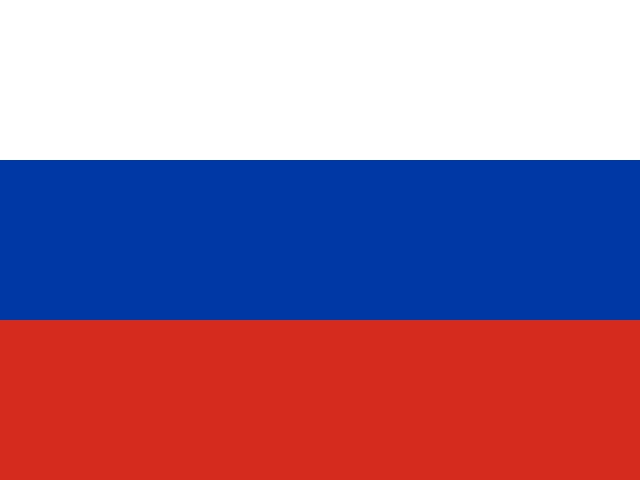
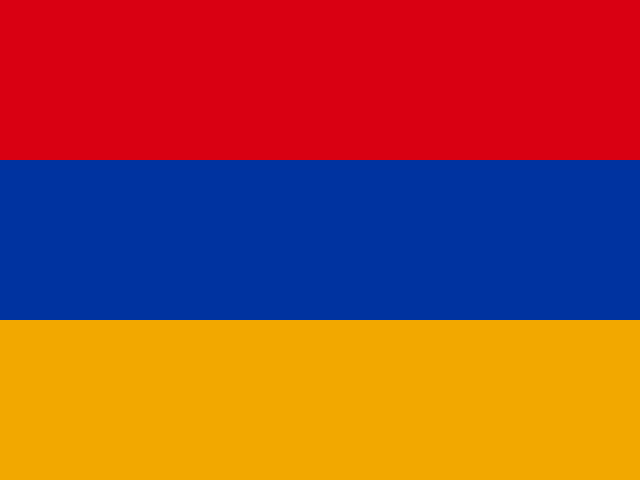
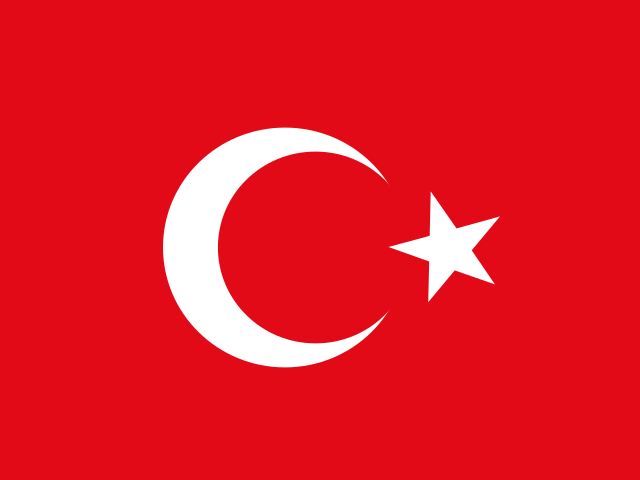
Of Georgia and its four neighbors, the latest coverage of the first measles dose is highest in Russia, at 97%, and lowest in Azerbaijan, at 71%. Georgia is fourth of the five, at 90%.
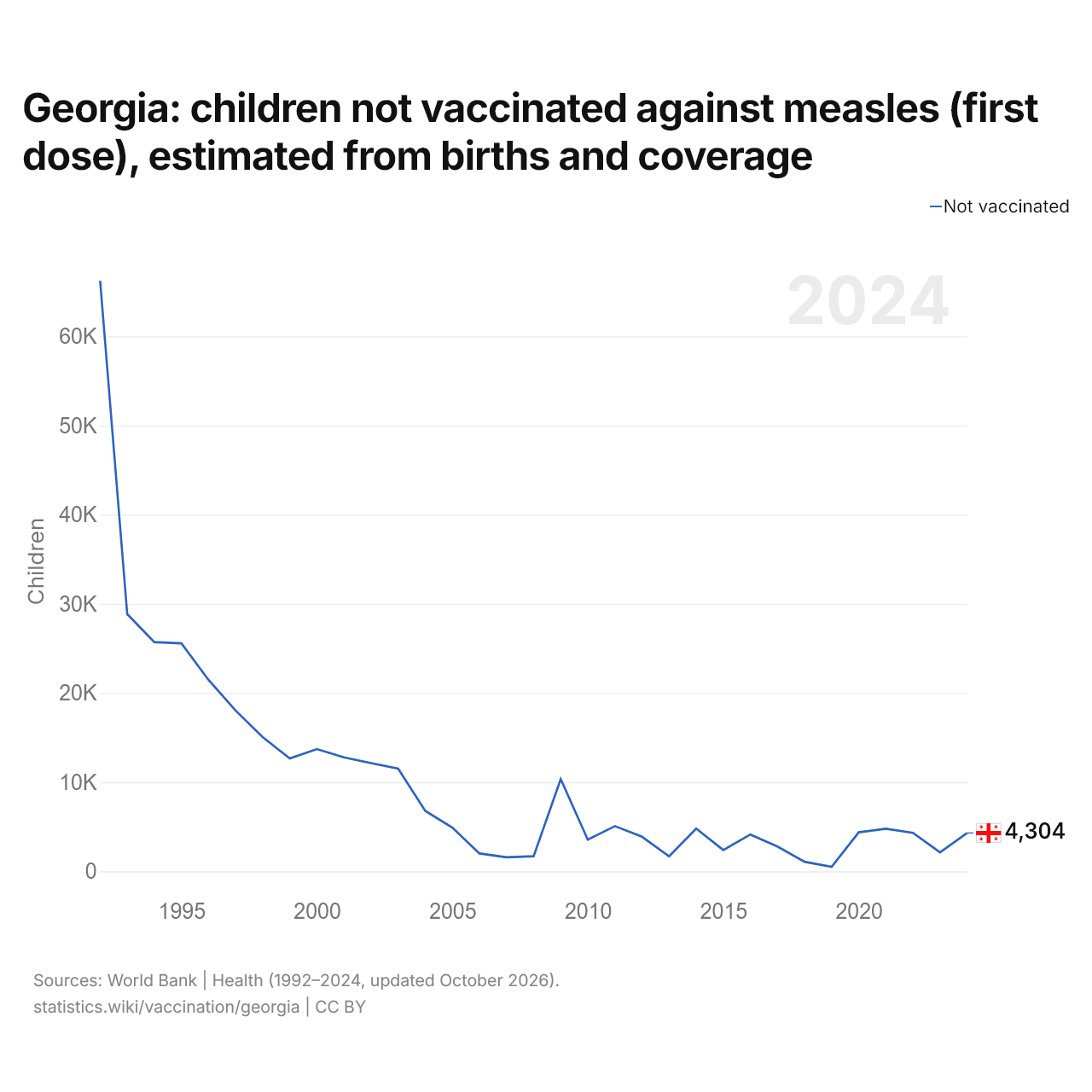
Georgia: children not vaccinated against measles (first dose), estimated from births and coverage
| Year | Children |
|---|---|
| Not vaccinated | |
| 2024 | 4,304 |
| 2023 | 2,135 |
| 2022 | 4,311 |
| 2021 | 4,777 |
| 2020 | 4,373 |
| 2019 | 505 |
| 2018 | 1,068 |
| 2017 | 2,778 |
| 2016 | 4,127 |
| 2015 | 2,387 |
| 2014 | 4,788 |
| 2013 | 1,680 |
| 2012 | 3,878 |
| 2011 | 5,067 |
| 2010 | 3,553 |
| 2009 | 10,336 |
| 2008 | 1,697 |
| 2007 | 1,574 |
| 2006 | 2,003 |
| 2005 | 4,903 |
| 2004 | 6,777 |
| 2003 | 11,506 |
| 2002 | 12,140 |
| 2001 | 12,784 |
| 2000 | 13,707 |
| 1999 | 12,653 |
| 1998 | 15,055 |
| 1997 | 18,025 |
| 1996 | 21,465 |
| 1995 | 25,569 |
| 1994 | 25,709 |
| 1993 | 28,848 |
| 1992 | 66,232 |
An estimated 4,300 children in Georgia do not get the first measles dose a year, down from 66,200 children in 1992. The number was lowest in 2019, at 505 children.
Compare Georgia vaccination rates with other countries
Sources:
- World Bank | Health (1992–2024, updated October 2026)
Creative Commons Attribution (CC BY): you may copy, share, adapt and reuse this content, also commercially, as long as you credit statistics.wiki and note any changes you made. The sources listed above may have their own license terms.