
Afghanistan inflation rate chart: yearly change in consumer prices, 2003–2025
| Year | Inflation rate |
|---|---|
 Afghanistan |
|
| 2025 | 3.6% |
| 2024 | −4.3% |
| 2023 | −7.7% |
| 2022 | 10.6% |
| 2021 | 7.8% |
| 2020 | 5.6% |
| 2019 | 2.3% |
| 2018 | 0.6% |
| 2017 | 5% |
| 2016 | 4.4% |
| 2015 | −0.7% |
| 2014 | 4.7% |
| 2013 | 7.4% |
| 2012 | 6.4% |
| 2011 | 11.8% |
| 2010 | 2.2% |
| 2009 | −6.8% |
| 2008 | 26.4% |
| 2007 | 8.7% |
| 2006 | 6.8% |
| 2005 | 10.6% |
| 2004 | 16.4% |
| 2003 | 35.7% |
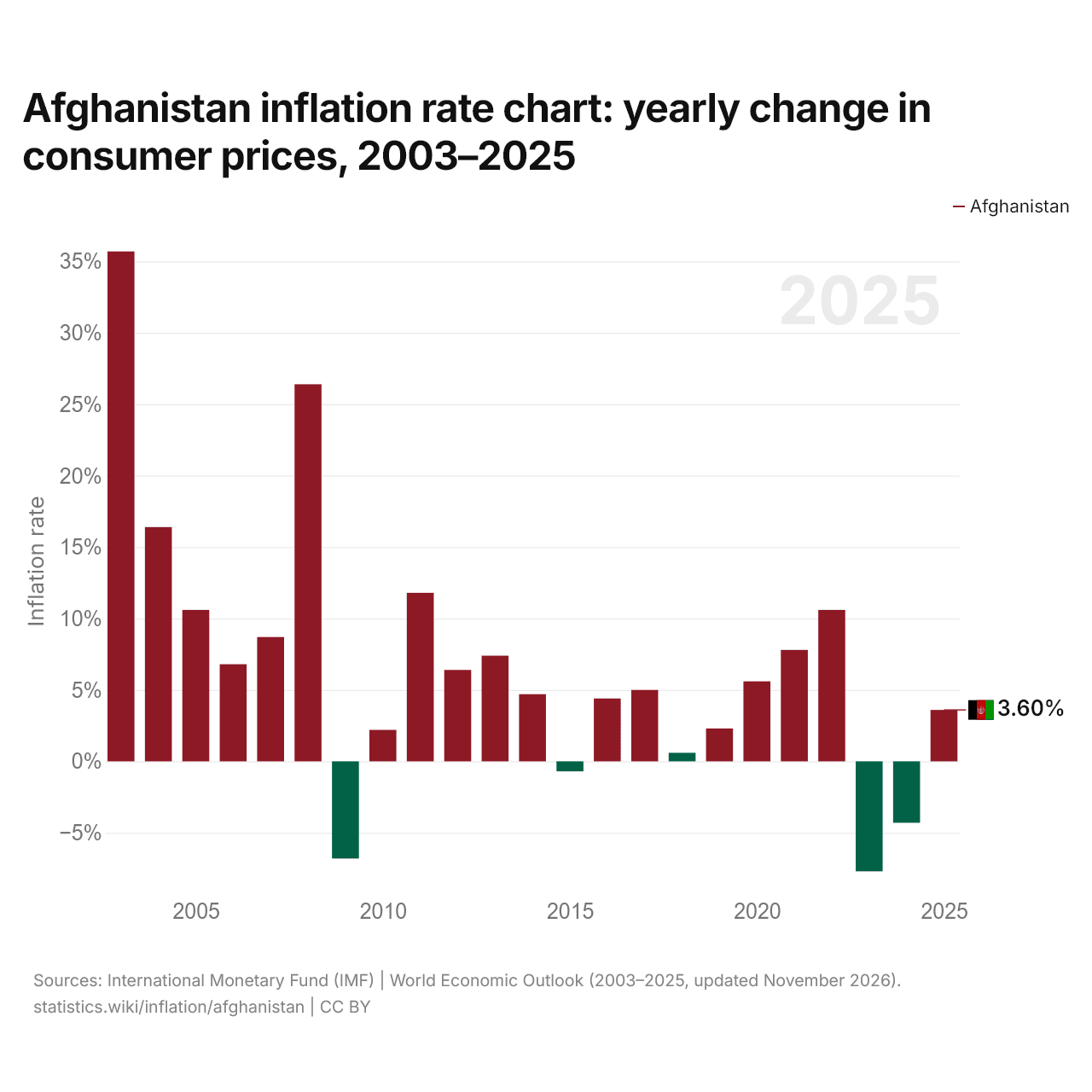
In 2025, consumer prices in Afghanistan rose 3.6%, after a fall of 4.3% in 2024. Inflation was highest in 2003, at 35.7%, and prices fell the most in 2023, by 7.7%. Prices in Afghanistan fell in four years: 2009, 2015, 2023 and 2024.
Consumer prices in Afghanistan rose more than 10% in six of the years from 2003 to 2025, most recently in 2022.
Afghanistan's inflation rate in 2025 was the 16th highest of 47 countries in Asia, where it ranged from Sri Lanka's −4.8% to Iran's 42.2%.
Afghanistan inflation rate: averages, highest and lowest
| Inflation rate, 2025 | 3.6% |
|---|---|
| Average per year, 2021–2025 | 1.8% |
| Average per year, 2016–2025 | 2.7% |
| Highest inflation rate | 35.7% (2003) |
| Lowest inflation rate | −7.7% (2023) |
Compare Afghanistan inflation rate with other countries
Sources:
- International Monetary Fund (IMF) | World Economic Outlook (2003–2025, updated November 2026)
Creative Commons Attribution (CC BY): you may copy, share, adapt and reuse this content, also commercially, as long as you credit statistics.wiki and note any changes you made. The sources listed above may have their own license terms.