
Saudi Arabia government spending (% of GDP), 1990–2025
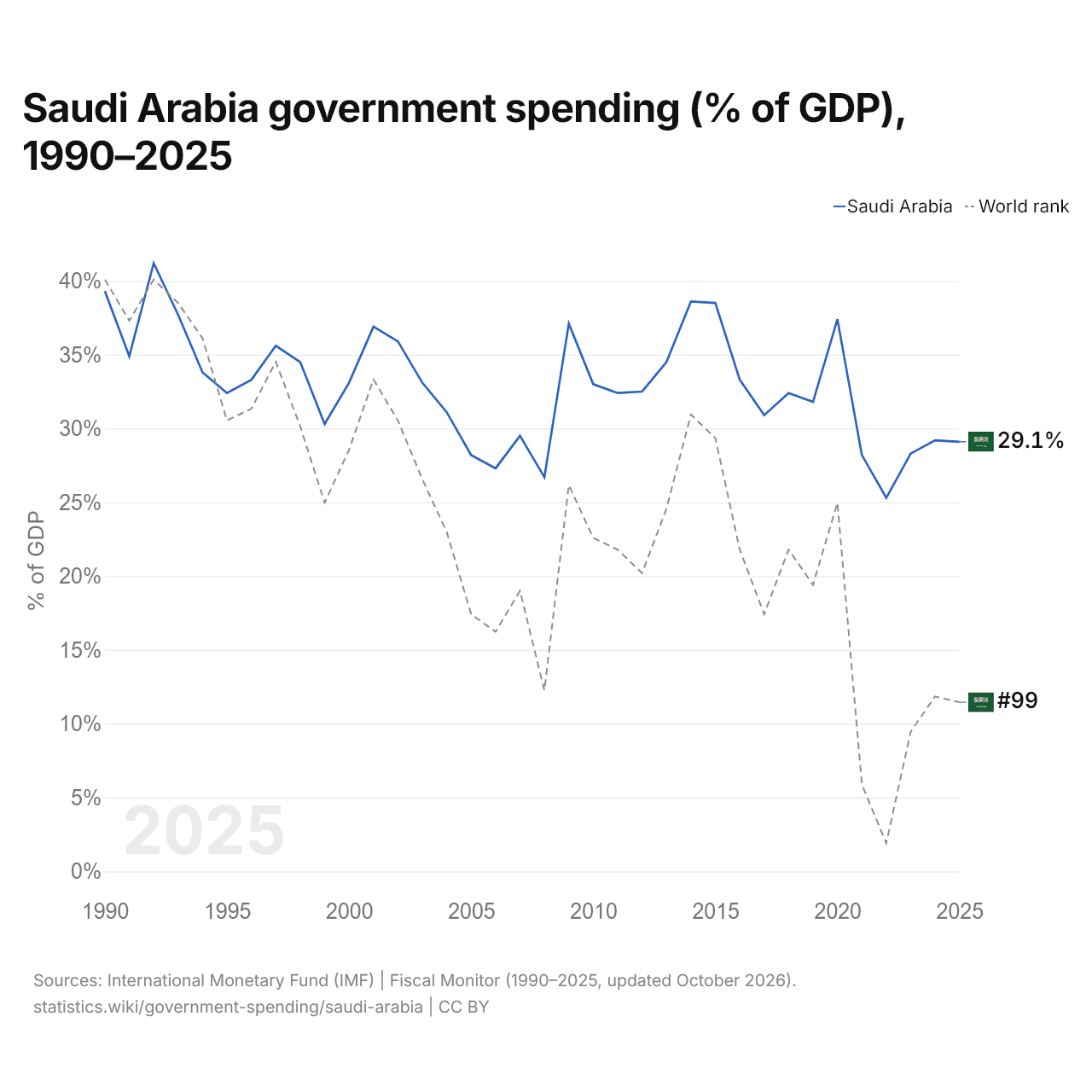
In 2025, Saudi Arabia's government spending was 29.1% of GDP, down from 39.3% in 1990. It was highest in 1992, at 41.2%. It was the 99th highest share in the world, down from 98th in 2024. Its highest rank was 27th, last held in 1992.
In 2025, Saudi Arabia's government spending was the 18th highest of 45 countries in Asia, where it ranged from Bangladesh's 11.1% to East Timor's 89.3%. The largest ten-year fall in Saudi Arabia's government spending was from 1990 to 2000, by 6.2 percentage points of GDP; the largest ten-year rise was from 2010 to 2020, by 4.4 points.
Saudi Arabia's military spending was 6.5% of GDP in 2025. Saudi Arabia's government spending on education is 4.5% of GDP, the 78th highest share in the world.
Saudi Arabia government spending in US$ and % of GDP
| Year | US$ | % of GDP | US$ per person | World rank |
|---|---|---|---|---|
| 2025 | $371B | 29.1% | $10,041 | #99 |
| 2020 | $287B | 37.4% | $9,099 | #65 |
| 2010 | $174B | 33.0% | $7,272 | #71 |
| 2000 | $62.8B | 33.1% | $3,881 | #56 |
| 1990 | $46.2B | 39.3% | $4,342 | #27 |
Saudi Arabia in the world ranking by government spending, % of GDP, 2025

Compare Saudi Arabia government spending with other countries
Sources:
- International Monetary Fund (IMF) | Fiscal Monitor (1990–2025, updated October 2026)
- World Bank | Economy & Growth (1990–2025, updated October 2026)
Creative Commons Attribution (CC BY): you may copy, share, adapt and reuse this content, also commercially, as long as you credit statistics.wiki and note any changes you made. The sources listed above may have their own license terms.